
Will AI Replace Construction Workers? Here’s the Honest Answer
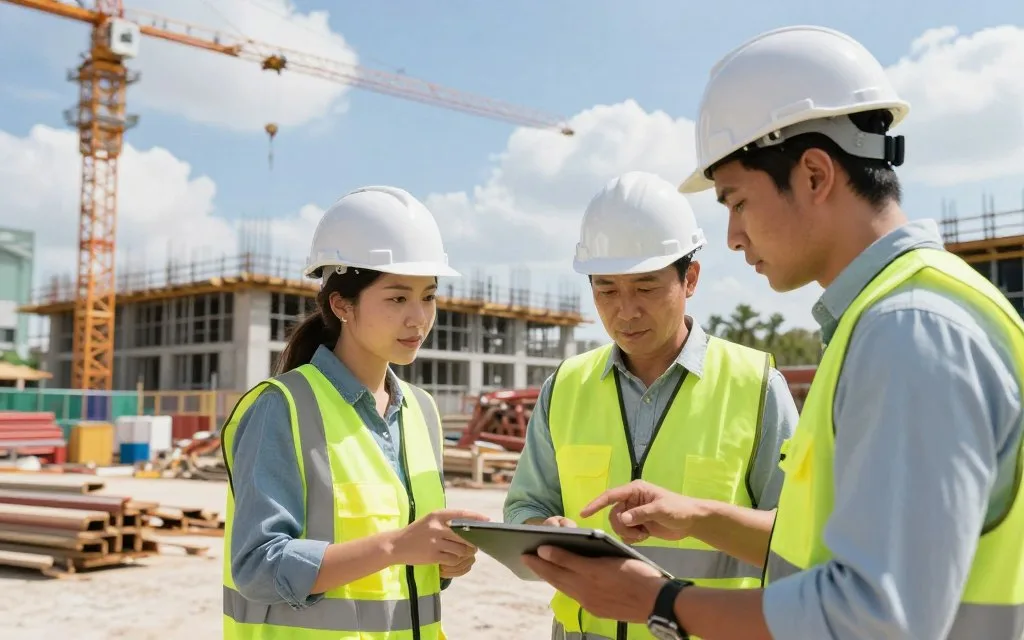
AI is changing construction work, but a machine taking over an entire job is a much bigger step than automating one task for construction workers. On U.S. job sites, the question matters to field workers, trade specialists, equipment operators, and supervisors planning their next steps.
Task exposure means the share or type of a job’s tasks that AI could affect, not a prediction that the whole job disappears. A task can change while the occupation remains, though workers may need to adjust how they do the work.
This distinction gives a more useful way to think about the future than a simple yes-or-no prediction. It keeps attention on the skills people use today and the changes happening around them.
Treat new tools as a reason to understand how work is changing, not as proof that a trade has no future.
Key Takeaways
- AI is more likely to change tasks than remove whole field occupations.
- Data-heavy, repetitive work is easier to automate than changing site work.
- Robots can handle defined operations, while crews still adapt to conditions.
- AI safety alerts need a person to check and act on them.
- Construction hiring demand and technology change can happen at the same time.
- Trade knowledge and digital confidence both help workers adapt.
Will AI Replace Construction Workers?
No, AI is not poised to replace construction workers as a group, though it can change how parts of their jobs get done. Physical work on active sites still depends on people who coordinate, use strength, and judge changing conditions.
Construction work rarely follows a perfect script. Crews respond to weather, uneven ground, shifting plans, and other trades working nearby. That makes full automation of field work a different prospect from automating data-heavy tasks.
Task exposure describes work that AI could affect; it does not predict that an entire occupation will disappear.
Is construction safe from AI? It is not untouched, but that does not mean machines can take over field crews. AI could automate tasks accounting for 25% of U.S. work hours, across all kinds of work, not just construction.
Employment projections reflect technological change as it appears in historical data, and those effects tend to unfold gradually. A construction industry response can include changed duties, new tools, or shifts in hiring rather than a sudden end to an occupation.
Demand also depends on building activity, public and private investment, and the need to maintain infrastructure. Those forces can support construction jobs even as some tasks change. Judge the risk by which tasks a role contains, rather than by the job title alone.
Which Construction Tasks Can AI Automate First?
AI is most likely to take over a repeatable information task before it takes over the changing physical work around it. Repetitive tasks that use clear records are easier to support with software than field decisions tied to live site conditions.
AI can sort data and prepare drafts, but a person still needs to check what the information means for the project. The person who approves an estimate or a change remains responsible for that decision.
What jobs will AI replace first in construction?
AI is more likely to affect parts of office-based roles than replace a whole construction job. Estimating support, permit processing, report drafting, and document handling involve repeated steps and large amounts of data.
Software may compare quantities, flag missing paperwork, or draft a report from project notes. Those results can help project management, but they do not give software ownership of a permit, budget, or contract decision.
A 2023 study of 5,179 customer support agents found that generative AI raised issues resolved per hour by 14% on average. Novice and lower-skilled agents improved by 34%, while experienced and highly skilled agents saw minimal impact. That result shows how assistance can affect tasks, not how much construction productivity will change.
What an AI construction worker can do today
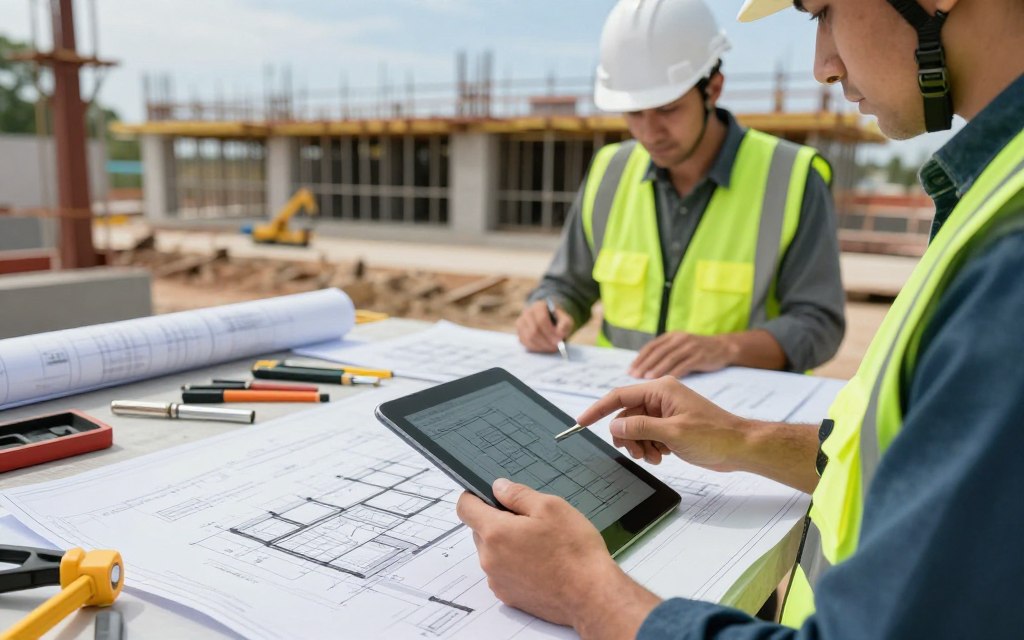
An AI construction worker usually means a field worker using AI-enabled tools, not a robot replacing a crew member. A worker may use a digital layout or project data to plan a task, while retaining responsibility for layout, troubleshooting, and execution.
| Task area | What AI can assist with | Human responsibility |
|---|---|---|
| Document and report drafting | Draft a daily report from field notes | Check dates, names, and completed work |
| Estimate preparation | Group quantities from plan files | Compare takeoffs with plan details |
| Schedule data review | Flag a missed delivery date | Confirm the supplier’s current delivery time |
| Field execution | Show a digital layout point | Check the point against the plan and site |
Check AI-generated quantities and reports against the plans and site conditions before using them to make a commitment.
What Role Do Robots Play on Construction Sites?
Robots are appearing in construction, but their clearest uses are specific operations rather than a whole site running without people. Defined operations let machines repeat movements while workers set up the work and respond to changes.
In a 2025 contractor survey, 46% reported using at least some robotics or automated machinery, down from 65% in 2024. Yet 95% rated their company’s robotics strategy “good” or better in 2025, up from 74% in 2024.
Will AI replace heavy equipment operators?
No, autonomous equipment does not simply make heavy equipment operators redundant. People still set up machines, watch the work area, and handle exceptions when conditions differ from the planned operation.
Automation can take on defined equipment movements in suitable conditions. An operator’s role may shift toward machine setup and oversight, while nearby workers manage other parts of the job.
Robots for excavation, rebar and layout
Built Robotics’ autonomous excavators have completed more than 100 miles of trenching and can trench at up to 180 feet per hour. That speed applies to a defined task, not every excavation job or ground condition.
TyBOT completed 139,261 rebar ties on a 171,733-square-foot bridge deck. HP SitePrint was used across 120,000 feet of wall track covering two million square feet.
These examples show how robots can handle repetitive work at a set scale. They do not remove the need for crews to prepare the area, check results, and fit the operation into the rest of construction work.
Before treating a machine as a labor substitute, check what happens when the ground, plan, or work sequence changes.
How Is AI Changing Safety and Project Management?
A camera can flag a visible hazard quickly, but a supervisor still has to verify what is happening and decide how to respond. Safety monitoring tools can spot visible concerns, but they cannot identify every hazard or make a site safe on their own.
Camera systems using computer vision can flag missing visible PPE or access-zone concerns. Their accuracy depends on camera coverage and site context, so a blocked view can leave a hazard unseen.
OSHA generally requires fall protection at elevations of 6 feet or more in construction, subject to exceptions in the applicable standard. OSHA rules also cover excavation and electrical hazards. A legal summary explains the six-foot fall-protection rule and related case details.
Project management systems can compare schedule updates with weather, labor availability, and material information. A warning about a delay may help a supervisor review the plan, but it cannot know every condition on the ground.
- Confirm the location and time of an alert.
- Inspect the hazard in person.
- Verify that a schedule warning matches current site conditions.
- Document who is responsible for acting.
These checks keep digital alerts tied to real work and clear responsibility. AI alerts supplement OSHA compliance and active supervision; they do not replace either one.
Keep a named person responsible for every safety alert that requires action.
What Does AI Mean for Construction Jobs and Demand?
AI-related change is happening alongside substantial demand for workers to build and support new infrastructure. Investment in data centers and energy projects can add construction work even as tools change how some tasks get done.
U.S. construction jobs exposed to data-center construction increased by 216,000 since 2022 as data-center investment drove demand. Roughly 500,000 net new U.S. jobs will need to be filled by 2030 to meet growing power demand, including construction workers, engineers, electricians, and lineworkers.
Equipment-operator projections describe one occupation, not every construction trade. The figures include employment growth, annual openings, and pay, which measure different things.
| Measure | Figure | Period or condition |
|---|---|---|
| Equipment-operator employment growth | 4%, or 21,800 jobs | 2025-2035 |
| Annual equipment-operator openings | 42,500 on average | Each year, 2025-2035 |
| Median annual equipment-operator wage | $59,600 | May 2025 |
| Power-sector job demand | Roughly 500,000 net new jobs | By 2030, to meet growing power demand |
Annual openings include jobs that need replacements when workers transfer occupations or leave the labor force. They are not the same as net job growth, and an opening does not promise a role for any one applicant.
Construction demand can rise in one part of the industry while hiring stays slower in another. Regional projects and the kind of work being built shape what workers see locally.
Read openings, net employment growth, and wages as separate measures, not interchangeable promises about an individual job.
What Skills Help Construction Workers Stay Valuable?
The most useful preparation combines a strong trade skill with enough digital confidence to work alongside new tools. Trade knowledge helps workers spot when a screen, plan, or machine does not match the job.
Construction workers do not need to become AI programmers to adapt. Field experience can pair with practical tool use, especially when a job calls for clear communication between trades.
Build trade depth and equipment skill
Trade specialization gives workers a deeper base for solving jobsite problems. Electricians, carpenters, pipefitters, and other skilled trades use different knowledge, tools, and safety practices.
Equipment operation, blueprint reading, and field problem-solving also support reliable work. Registered apprenticeships combine paid on-the-job learning with related instruction, giving new workers a way to build skills while earning.
Learn digital tools without overtraining
Digital plans and project management apps can help workers see updates and coordinate tasks. Workers who can interpret AI-generated information can ask useful questions without writing code.
Employers may provide training for the systems used on a project. OSHA’s 10-hour Outreach Training is voluntary and does not replace employer-specific safety training.
- Ask a supervisor which digital tools are used on site.
- Practice reading digital plans.
- Pursue trade-specific or equipment training.
- Check that safety training matches the work and employer requirements.
Build on the trade skills you use now, then learn the digital tools that support your actual work.
Choose one skill used on your current or next project and ask your employer or apprenticeship program how to practice it.
Conclusion
AI is changing parts of construction, but strong field judgment and trade skill still matter. Tools may reshape tasks without removing the need for people who can work safely and adapt on site.
A practical next step is to identify one digital or AI-enabled tool your employer uses. Learn what information it gives and how a worker should check its output before relying on it.
Ask a supervisor or training coordinator to show you one tool used on your next project and how its output should be checked.
Leave a Reply