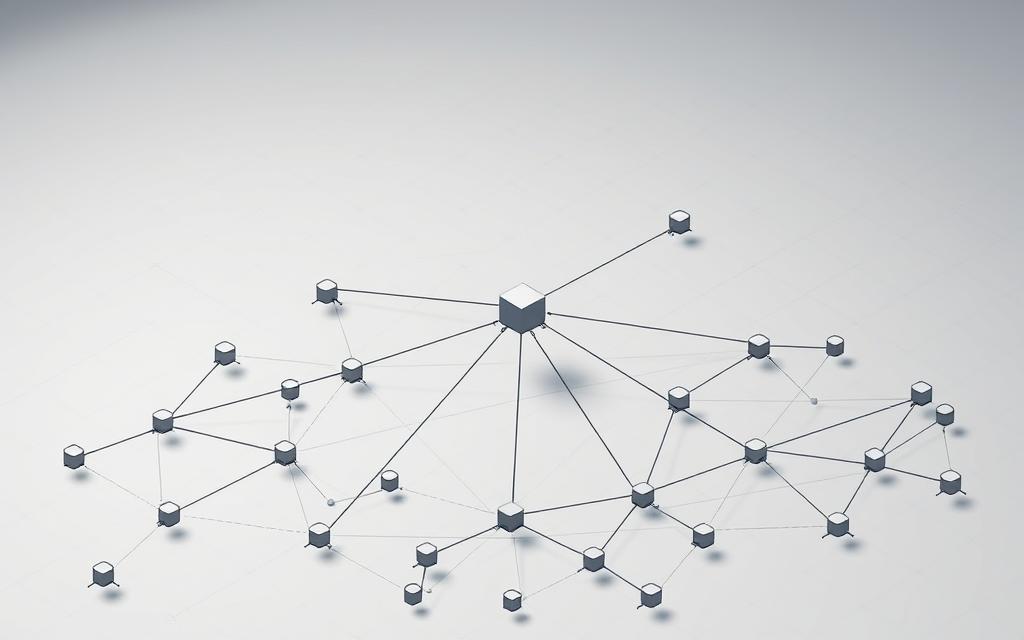
Peer-to-peer networks are a new way to share information online. They don’t use a central server like old systems do. Instead, everyone acts as both a client and a server at the same time.
This setup means users can connect directly with each other. It makes the system more reliable and less prone to failures. It’s changed how we share files and data online.
From Napster in the early days to today, P2P networks have grown a lot. They now help many industries, not just for sharing files. This change makes them more flexible and efficient.
These networks are great for sharing content because they work together. Users help each other out instead of relying on one big server. This teamwork is what makes peer-to-peer networking special.
Peer-to-peer technology is a new way for devices to talk to each other on networks. It’s different from old systems that have one boss. In P2P, everyone works together as equals.
Core Definition and Fundamental Concepts
Peer-to-peer networking lets computers talk directly, without a middleman. Each computer, or peer, can do the same things. This makes the network fair and open.
This fair setup makes sharing data easy. As one source says:
“Peer-to-peer file sharing lets people share files by connecting directly. P2P software finds other computers to share files with.”
It’s all about sharing resources. Everyone is both a giver and a receiver. This makes a strong, team effort online.
Distinction from Traditional Client-Server Models
Old networks have a boss, the server, and followers, the clients. This can slow down when lots of people want something.
P2P is different because it’s fair and strong. It doesn’t have one weak spot. Here’s how they compare:
Feature
Client-Server Model
Peer-to-Peer Architecture
Resource Distribution
Centralised on servers
Distributed across all nodes
Failure Points
Single points of failure
Redundant and resilient
Scalability
Limited by server capacity
Grows with participant numbers
Cost Structure
Requires expensive infrastructure
Leverages existing resources
This way of working makes networks strong and uses resources well. Without a single boss, P2P networks are hard to break.
Today, P2P is growing. It’s used in new ways like blockchain and big computing projects.
Architecture and Operation of Peer-to-Peer Networks
Peer-to-peer networks have a unique network architecture. They differ from traditional client-server models. This decentralised system is strong because each part helps out, not just one central point.
Basic Structure and How Data Is Exchanged
In P2P systems, every node is both a client and a server. This lets peers share data directly, without needing a middleman. The network is like a dynamic mesh, changing as people join or leave.
Data sharing happens at the same time. When someone wants a file, the system finds many sources to download from. This makes sharing faster than if it came from just one place.
Decentralised Control and Its Implications
Not having a central authority means the system is more reliable. It can’t fail because of one thing. When more people join, the network gets stronger, thanks to everyone’s help.
But, this setup also has its downsides. Without someone in charge, keeping things in order and safe is harder. Everyone has to work together to make sure things run smoothly.
Common Protocols Utilised in P2P Systems
Many protocols help P2P networks work. Each one is special, designed for different needs. They tell peers how to find each other and share data.
Examples: BitTorrent, Gnutella, and eDonkey
The BitTorrent protocol changed file sharing. It uses a tracker to help peers connect, but data is shared directly. This mix makes it fast and flexible.
Gnutella was the first to really go for decentralisation. It lets peers search the network, making it wide-reaching but sometimes slow. After Napster closed, Gnutella and others let people share all sorts of things.
eDonkey is a mix of centralised and decentralised. It has a server for finding files, but shares data peer-to-peer. This makes finding things easier while keeping data sharing open.
Each protocol tackles the challenges of decentralised network architecture in its own way. From Gnutella to BitTorrent, P2P technology keeps getting better.
Key Components in P2P Systems
Understanding the basics of peer-to-peer networks shows how they work well and stay strong. They use special parts that work together. This makes a system that runs without a boss.
Roles of Nodes and Peers
In P2P systems, everyone is both a user and a server. These parts, called nodes or peers, are usually computers. They share their power, storage, and internet speed with others.
Each peer knows a bit about the network and uses it too. This setup helps the system grow and stay strong. It’s good for everyone involved.
What makes P2P special is it doesn’t need a main server. This lets it grow and change easily as people join or leave.
Functions of Indexing and Discovery Services
Finding files in a big network needs smart tools. Indexing services are like maps that help find files. They help peers find what they need among lots of options.
Old systems like Napster used big servers to list files. Now, we use smart maps called distributed hash tables (DHTs). These maps help find where files are without needing a big server.
These services match file names with where they are. When you look for a file, they help find it. Then, they connect you directly to get the file.
Component Type
Primary Function
Implementation Examples
Nodes/Peers
Resource sharing and consumption
End-user computers, mobile devices
Indexing Services
Content location mapping
Central servers, distributed hash tables
Discovery Mechanisms
Network peer identification
Query flooding, supernodes, trackers
The way these parts work together makes P2P systems great. They can share files well and keep working even when things go wrong. This is why P2P networks are so good at sharing stuff.
File Sharing Processes in P2P Networks
Peer-to-peer networks have changed how we share digital content online. They create systems where users share files directly, without needing a central server. This section looks at how P2P file sharing works and the legal issues it faces.
Mechanisms of Downloading and Uploading
In P2P networks, files are split into smaller parts and shared among users. When you download, your software gets these parts from many peers at once. This makes downloads much faster than using a server.
While you download, you also upload parts of the file to others. This way, everyone helps each other, making sharing more efficient and cheaper for everyone.
Seeders: These are users who have the full file and keep sharing it
Leechers: Users downloading files while also uploading parts they’ve got
Swarms: The group of users sharing a file, including both seeders and leechers
For the network to work well, there should be more seeders than leechers. This keeps files available for others to download.
Legal and Ethical Aspects of P2P File Sharing
P2P technology makes sharing content easy, but it raises big legal questions. The technology itself is neutral, but it’s often used to share copyrighted material without permission.
Many industries worry about the economic effects. Policy analyst Norbert Michel said studies show different views on how P2P affects album sales. This shows the ongoing debate about P2P’s economic impact.
Copyright Issues and Regulatory Considerations
Copyright infringement is the main legal problem with P2P networks. Sharing music, films, software, and other content without permission has led to many lawsuits.
How countries deal with P2P varies. Some are strict, while others are more relaxed. The balance between new technology and protecting copyrights is a big challenge.
There are also ethical questions about how to share content fairly. While P2P can be used for illegal sharing, it also has good uses like sharing open-source software and public domain content. This shows its positive side.
Pros and Cons of P2P Technology
Peer-to-peer technology has both amazing strengths and big challenges. It’s important to know both sides to make smart choices.
Advantages: Scalability, Fault Tolerance, and Cost Efficiency
P2P networks grow stronger as more people join. They don’t get slower or break down. This makes them very reliable.
They can handle failures well. If one part goes down, others keep working. This keeps data flowing.
They also save money. Costs are spread out among users, not just one server. This cuts down on expenses a lot.
“Peer-to-peer file sharing is also efficient in terms of cost. The system administration overhead is smaller because the user is the provider and usually the provider is the administrator as well.”
Disadvantages: Security Risks and Management Challenges
P2P systems have big security risks. They can spread malware easily. This is a big worry for keeping data safe.
They can also be hit by denial-of-service attacks. With many devices involved, there are lots of ways to attack. This makes keeping them safe hard.
Managing them is tough too. It’s hard to keep everyone following the same rules. Finding and fixing problems is also a big job.
Aspect
Advantages
Disadvantages
Network Performance
Improves with more users
Variable speed depending on peers
Reliability
No single point of failure
Difficult quality control
Cost Structure
Distributed among users
Hidden maintenance costs
Security Level
Decentralised protection
Multiple vulnerability points
Management
Reduced central administration
Complex troubleshooting
When thinking about using P2P, consider both sides carefully. It has great benefits but needs strong security and good management.
Conclusion
Peer-to-peer technology marks a big change from old centralised systems. It lets us share and compute on a huge scale. Each person can be both a client and a server, making systems strong even when parts fail.
Starting with file-sharing debates, P2P has grown into real uses in many fields. It helps share content, update software, and do big computing tasks. It also shapes new tech like blockchain and storage, as shown in this guide to P2P networks.
Looking ahead, P2P faces challenges like security and rules. But it’s key in our connected world. It gives us strong, new ways to handle data and do computing tasks.
FAQ
What is P2P technology?
P2P technology is a way computers talk to each other without a central server. Each computer, or peer, shares its resources like storage and bandwidth. This makes the network strong and flexible.
How does a peer-to-peer network differ from a client-server model?
In a client-server model, one server helps many clients. But in P2P, everyone helps each other. This makes the network more reliable and efficient.
What are some common protocols used in P2P systems?
BitTorrent is a well-known P2P protocol for sharing files. Gnutella and eDonkey are others. Each has its own strengths for different needs.
What roles do nodes and peers play in a P2P network?
Nodes in a P2P network share and use resources. They give and get data from others. This teamwork makes the network strong and efficient.
How do indexing and discovery services work in P2P networks?
Services help find resources in P2P networks. Old systems used central indexes, while new ones use distributed hash tables. This makes finding content easy and fair.
What are the legal concerns associated with P2P file sharing?
Sharing files on P2P networks can lead to legal trouble. It’s about respecting others’ work. Cases like Napster have shown the need for careful rules.
What security risks are associated with P2P technology?
P2P networks face threats like malware and data breaches. There’s also a chance of sharing personal info. Good security is key to staying safe.
What advantages does P2P technology offer over traditional networks?
P2P networks grow stronger with more users. They’re fault-tolerant and cost-effective. This makes them better than traditional networks in many ways.
Are there legitimate uses for P2P technology beyond file sharing?
Yes, P2P is used for many things. It helps with distributed computing, content delivery, and even blockchain. It’s great for any task needing resilience and efficiency.
How has P2P technology evolved from its early days?
P2P has grown a lot from its start in file sharing. Now, it’s used in new areas like cryptocurrency and communication. It’s shown to be adaptable and valuable.