



Ford’s innovative powertrain is a big step forward in car engineering. It uses turbocharging and direct fuel injection. This makes engines that are powerful for their size.
This tech gives cars the performance of bigger engines but uses less fuel. Drivers get up to 20% better fuel efficiency and 15% less greenhouse emissions.
Introduced in 2009, it’s a key part of Ford’s car range worldwide. It’s a great choice for those who want good fuel economy and performance, without the need for hybrids or diesel.
The design of EcoBoost ensures quick power and is good for the environment. It’s perfect for drivers who care about both performance and the planet.
What Is Ford EcoBoost Technology: The Core Concept
Ford’s EcoBoost technology is a new way to make engines. It uses three main technologies to make cars go fast and use less fuel.
Defining the EcoBoost Engineering Philosophy
The EcoBoost idea is simple: get more from less. Ford’s team wanted to make smaller engines that act like bigger ones. This way, cars can be more efficient without losing power.
The ecoboost engineering philosophy is all about smart efficiency. It combines turbocharging, direct fuel injection, and variable cam timing. This mix makes engines that are quick to respond and save fuel.
Ford’s team added 128 new patents to their collection. These show their dedication to making engines better.
Related Posts:
- How to Find the Technologies Used in a Website Tools…

- What Is Moonshot Technology Ambitious and…

- What Are the Mobile Technologies From 5G to NFC and Beyond

- How to Use Technology in an Elementary Classroom…

- What Is Semantic Technology Understanding Data…

- How to Remove Intel Rapid Storage Technology A Safe…

Historical Development and Technological Evolution
The ford engine evolution through EcoBoost started as a response to what people wanted. Engineers aimed to create a cost-effective alternative to hybrid and diesel engines.
Early Implementations and Market Introduction
Ford launched the first EcoBoost engines in 2009. This was a big step in car engineering. People loved the mix of power and better fuel use.
By 2012, Ford was making 1.3 million EcoBoost engines every year. This showed how popular and good the technology was.
By 2013, most of Ford’s cars had EcoBoost options. This showed the technology worked well in many different cars.
Current Generation Advancements and Refinements
Today’s EcoBoost engines are the result of ongoing work. Recent updates focus on three main areas:
- Improved thermal management systems
- Advanced materials science applications
- More advanced electronic control systems
These updates have made Ford’s engines more reliable and powerful. The latest engines are a big step up from the first ones.
The turbocharged direct injection system has seen big improvements. Engineers have worked on making combustion better and reducing turbo lag.
| Engine Configuration | Initial Power Output | Current Power Output | Efficiency Improvement |
|---|---|---|---|
| 1.0L Fox Engine | 100 HP | 125 HP | 15% |
| 2.0L I4 Engine | 240 HP | 250 HP | 12% |
| 3.5L V6 Engine | 365 HP | 375 HP | 10% |
Ford keeps making engines better with each new generation. They build on past successes and add new ideas.
The story of EcoBoost is not over. Ford is now combining EcoBoost with hybrid technology. This is the next step in making cars efficient and powerful.
Core Components Powering EcoBoost Efficiency
Ford’s engineering is top-notch, thanks to three advanced systems. They work together to make combustion more efficient. This results in great power without wasting fuel.
Turbocharging System: The Heart of Performance
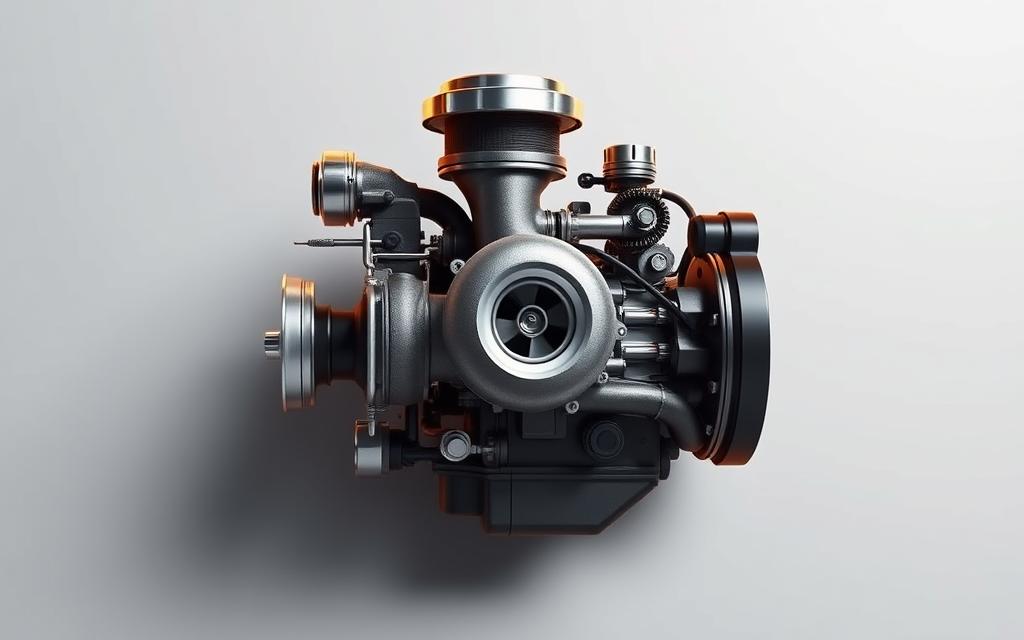
The ecoboost turbocharger system shows Ford’s dedication to turbo technology. It uses parts from Borg Warner and Honeywell Garrett. This ensures reliable boost pressure in all driving conditions.
How Ford’s Turbocharger Technology Operates
Exhaust gases spin the turbine at speeds over 200,000 RPM. This speed drives the compressor wheel. It pushes dense air into the combustion chambers.
This air allows for better fuel burning. It gets the most energy from every drop of petrol.
Variable Geometry Turbo Implementation
Modern EcoBoost engines have variable geometry turbos. These turbos have adjustable vanes. They change the exhaust gas flow based on engine speed.
At low RPM, the vanes make narrower passages for quick spool-up. At higher RPM, they open up for sustained boost.
Direct Fuel Injection Mechanism
Ford’s direct fuel injection mechanism works with turbocharging. It delivers fuel directly into the combustion chambers.
High-Pressure Injection System Architecture
The injection system works at high pressures, up to 200 bar. Six-hole injectors ensure fuel atomisation for complete combustion.
High-pressure pumps provide consistent fuel delivery. This keeps the air-fuel mix perfect under all conditions.
Precision Fuel Delivery Optimisation
Engine management controls the injection timing and duration. Multiple injections per cycle improve combustion efficiency.
The system adjusts for altitude, temperature, and load. This ensures top performance on mountains or highways.
Twin-Independent Variable Camshaft Timing Technology
Ford’s twin-independent variable camshaft timing system is a valve control innovation. It adjusts intake and exhaust camshaft timing independently.
It uses hydraulic actuators controlled by the engine computer. These actuators continuously optimise valve opening and closing.
Different engines use various drive mechanisms. The 1.0L Fox engine has an oil-bathed timing belt. Larger engines use roller finger followers with chain or belt drives.
| Component System | Key Technology | Primary Benefit | Implementation Example |
|---|---|---|---|
| Turbocharging | Variable Geometry Turbo | Boost optimisation across RPM range | Borg Warner turbochargers |
| Fuel Injection | High-pressure Direct Injection | Precision fuel metering | Six-hole injector design |
| Valve Timing | Twin-Independent Control | Optimal valve events | Oil-bathed timing belt (1.0L Fox) |
| Overall System | Integrated Management | Balanced performance/efficiency | ECU coordination of all systems |
These three systems work together to define the EcoBoost experience. They deliver the perfect balance of power and efficiency. Drivers enjoy this every day.
The Engineering Behind EcoBoost’s Efficiency Gains
Ford’s EcoBoost technology is a smart way to make engines. It balances power and saves fuel. This section looks at the science and systems that make it work.
Scientific Principles of Power and Economy Balance
EcoBoost makes small engines work like V8s. It does this by using smart thermodynamics and mechanics.
Thermal Efficiency Enhancement Strategies
EcoBoost engines have special exhaust manifolds. They catch heat and cut warm-up times. This means better fuel use when it’s cold.
Computer-controlled water pumps also help. They adjust coolant flow as needed. This keeps the engine at the right temperature.
Reduction of Pumping Losses and Energy Waste
Old engines waste a lot of energy. EcoBoost fixes this with better airflow. This makes moving air easier.
It also cuts down on energy waste in other ways:
- Precision-machined intake pathways reduce air resistance
- Low-friction pistons and bearings
- Electronically controlled systems that only work when needed
Performance Optimisation and Management Systems
EcoBoost uses smart electronics to improve performance. These systems make the engine efficient in real driving.
Advanced Boost Management Technologies
The turbocharger is controlled by electronics. It adjusts boost pressure based on many factors. This ensures great performance in all driving conditions.
It considers things like:
- Ambient air temperature and pressure
- Engine coolant and oil temperatures
- Current gear selection and throttle position
- Fuel quality and octane rating
Electronic Control Unit Programming and Calibration
The Bosch MED17 and MG1CS016 control units are key. They make thousands of decisions per second to improve engine performance.
The ECU’s calibration is very precise. It has advanced features like:
| Control Feature | Function | Benefit |
|---|---|---|
| Individual Cylinder Knock Control | Monitors each cylinder independently | Maximises advance timing without detonation |
| CAN-Bus Communication | Integrates with vehicle systems | Holistic performance optimisation |
| Millisecond Valve Timing | Precisely controls camshaft position | Optimal airflow for all conditions |
| Adaptive Fuel Mapping | Adjusts injection timing continuously | Perfect combustion under varying loads |
This calibration is the result of Ford’s work on EcoBoost. It makes the engine efficient and fuel-saving. The system adjusts constantly for the best performance.
Practical Benefits for Modern Drivers
Ford’s EcoBoost technology offers real benefits for drivers every day. It turns complex engineering into advantages that make driving better and more eco-friendly.
Enhanced Fuel Economy Without Performance Compromise
EcoBoost engines are great because they save fuel and keep performance high. They can be up to 20% more fuel-efficient than bigger engines.
This means drivers don’t have to choose between power and saving fuel. The Ford EcoBoost engine technology lets smaller engines do more.
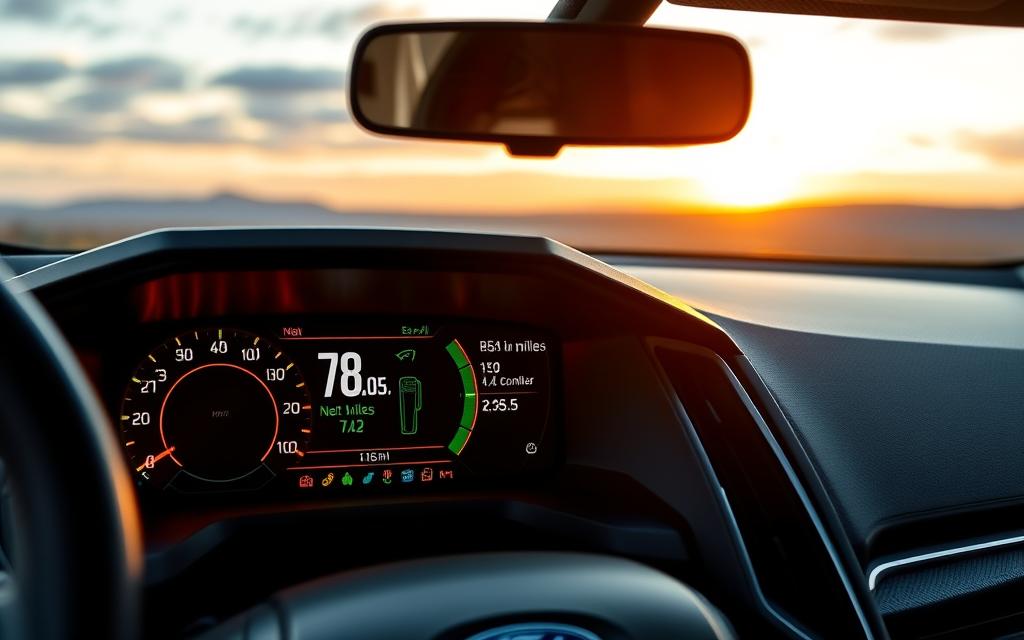
The 1.0-litre EcoBoost engine in the Ford Fiesta is a great example. It’s small but powerful, saving fuel and helping the environment.
Reduced Emissions and Environmental Considerations
EcoBoost technology shows Ford’s care for the environment. These engines emit about 15% less greenhouse gases than similar engines.
They also meet strict environmental rules around the world. This helps reduce car emissions without losing performance.
Key environmental benefits include:
- Lower CO2 emissions for cleaner air
- Less particulate matter from precise fuel injection
- More efficient combustion to waste less
Improved Driving Dynamics and Throttle Response
EcoBoost engines make driving better with quick power and better response. The turbocharger spins up fast, avoiding the usual lag.
Drivers get fast throttle response in all driving situations. This makes driving more fun and connected to the driver’s actions.
These engines also improve how the car handles. They help with balance and cornering, making the car more stable and fun to drive.
Driving in the city or on long roads is more enjoyable with EcoBoost. The quick power and smooth handling make every trip better.
EcoBoost Implementation Across Ford’s Vehicle Portfolio
Ford’s EcoBoost technology is versatile, powering many vehicles worldwide. It goes from small city cars to big trucks. This engine tech offers great performance and fuel efficiency for each car’s needs.
Compact Car Applications: Ford Focus and Fiesta
The ford focus ecoboost and Fiesta show how small engines can be powerful. They use 1.0-litre and 1.5-litre EcoBoost engines. These engines are great for city driving because they save fuel.
Key benefits include:
- Lower running costs for daily driving
- Quick acceleration in city traffic
- Less pollution than old engines
- More power from smaller engines
Performance Vehicle Integration: Ford Mustang EcoBoost
The mustang ecoboost performance package changes what we think of four-cylinder engines. The 2.3-litre turbocharged engine is as powerful as V8s but uses less fuel.
“The EcoBoost Mustang shows that you can have both efficiency and power”
This shows Ford’s dedication to making high-performance cars better for the environment. It offers exciting driving with less harm to the planet.
SUV and Truck Implementations: Ford Explorer and F-150
Ford’s big vehicles get a lot from EcoBoost, like the f-150 ecoboost implementation. The 2.7-litre and 3.5-litre V6 engines are strong for towing and carrying heavy loads.
These engines are also good on fuel, giving:
- Strong low-end torque for heavy loads
- Smooth power across the rev range
- Less fuel used on long drives
- Better performance off-road
The tech’s ability to fit many Ford vehicles shows its engineering skill. For more on Ford’s EcoBoost vehicles, there are detailed specs and performance data.
Conclusion
Ford’s EcoBoost technology is a big step forward in engine design. This summary shows how it balances power and efficiency well. It uses turbocharging, direct fuel injection, and advanced valve timing to beat bigger engines while using less fuel.
This technology marks a big win for Ford in engine design. Now, smaller engines can match the power drivers want with the fuel savings they need. The benefits include less pollution and better driving feel in Ford’s cars and trucks.
EcoBoost keeps getting better with new features like cylinder deactivation and hybrid tech. These updates keep Ford at the top in making cars that are good for the planet and fun to drive. EcoBoost is key to Ford’s plans for the future, meeting today’s needs and tomorrow’s challenges.
FAQ
What is Ford EcoBoost technology?
Ford EcoBoost is a smart way to make cars more efficient. It uses turbocharging and direct fuel injection. This makes cars more powerful while using less fuel and producing fewer emissions.
FAQ
What is Ford EcoBoost technology?
Ford EcoBoost is a smart way to make cars more efficient. It uses turbocharging and direct fuel injection. This makes cars more powerful while using less fuel and producing fewer emissions.
How does EcoBoost improve fuel efficiency without sacrificing performance?
FAQ
What is Ford EcoBoost technology?
Ford EcoBoost is a smart way to make cars more efficient. It uses turbocharging and direct fuel injection. This makes cars more powerful while using less fuel and producing fewer emissions.
FAQ
What is Ford EcoBoost technology?
Ford EcoBoost is a smart way to make cars more efficient. It uses turbocharging and direct fuel injection. This makes cars more powerful while using less fuel and producing fewer emissions.
What are the core components of an EcoBoost engine?
FAQ
What is Ford EcoBoost technology?
Ford EcoBoost is a smart way to make cars more efficient. It uses turbocharging and direct fuel injection. This makes cars more powerful while using less fuel and producing fewer emissions.
FAQ
What is Ford EcoBoost technology?
Ford EcoBoost is a smart way to make cars more efficient. It uses turbocharging and direct fuel injection. This makes cars more powerful while using less fuel and producing fewer emissions.
How does the turbocharging system in EcoBoost engines work?
FAQ
What is Ford EcoBoost technology?
Ford EcoBoost is a smart way to make cars more efficient. It uses turbocharging and direct fuel injection. This makes cars more powerful while using less fuel and producing fewer emissions.
FAQ
What is Ford EcoBoost technology?
Ford EcoBoost is a smart way to make cars more efficient. It uses turbocharging and direct fuel injection. This makes cars more powerful while using less fuel and producing fewer emissions.
What are the environmental benefits of EcoBoost technology?
FAQ
What is Ford EcoBoost technology?
Ford EcoBoost is a smart way to make cars more efficient. It uses turbocharging and direct fuel injection. This makes cars more powerful while using less fuel and producing fewer emissions.
FAQ
What is Ford EcoBoost technology?
Ford EcoBoost is a smart way to make cars more efficient. It uses turbocharging and direct fuel injection. This makes cars more powerful while using less fuel and producing fewer emissions.
In which Ford vehicles is EcoBoost technology available?
FAQ
What is Ford EcoBoost technology?
Ford EcoBoost is a smart way to make cars more efficient. It uses turbocharging and direct fuel injection. This makes cars more powerful while using less fuel and producing fewer emissions.
FAQ
What is Ford EcoBoost technology?
Ford EcoBoost is a smart way to make cars more efficient. It uses turbocharging and direct fuel injection. This makes cars more powerful while using less fuel and producing fewer emissions.
How does direct fuel injection contribute to EcoBoost’s efficiency?
FAQ
What is Ford EcoBoost technology?
Ford EcoBoost is a smart way to make cars more efficient. It uses turbocharging and direct fuel injection. This makes cars more powerful while using less fuel and producing fewer emissions.
FAQ
What is Ford EcoBoost technology?
Ford EcoBoost is a smart way to make cars more efficient. It uses turbocharging and direct fuel injection. This makes cars more powerful while using less fuel and producing fewer emissions.
What is twin-independent variable camshaft timing (Ti-VCT)?
FAQ
What is Ford EcoBoost technology?
Ford EcoBoost is a smart way to make cars more efficient. It uses turbocharging and direct fuel injection. This makes cars more powerful while using less fuel and producing fewer emissions.
FAQ
What is Ford EcoBoost technology?
Ford EcoBoost is a smart way to make cars more efficient. It uses turbocharging and direct fuel injection. This makes cars more powerful while using less fuel and producing fewer emissions.
How has EcoBoost technology evolved over time?
FAQ
What is Ford EcoBoost technology?
Ford EcoBoost is a smart way to make cars more efficient. It uses turbocharging and direct fuel injection. This makes cars more powerful while using less fuel and producing fewer emissions.
FAQ
What is Ford EcoBoost technology?
Ford EcoBoost is a smart way to make cars more efficient. It uses turbocharging and direct fuel injection. This makes cars more powerful while using less fuel and producing fewer emissions.
Does EcoBoost technology require special maintenance compared to conventional engines?
FAQ
What is Ford EcoBoost technology?
Ford EcoBoost is a smart way to make cars more efficient. It uses turbocharging and direct fuel injection. This makes cars more powerful while using less fuel and producing fewer emissions.
FAQ
What is Ford EcoBoost technology?
Ford EcoBoost is a smart way to make cars more efficient. It uses turbocharging and direct fuel injection. This makes cars more powerful while using less fuel and producing fewer emissions.
