


Education is changing fast, moving beyond old classroom ways. Digital tools have made learning more personal and easy to get to.
Now, learning is all about interactive fun, not just remembering facts. AI and virtual reality bring the world to students, getting them ready for the future.
Global events have shown how tech keeps education going. Places like 21K School have shown tech’s key role. The future of education is about mixing new ideas with careful planning.
As we welcome these educational technology trends, we must see both sides. The path to better digital learning needs careful steps to enjoy the good and fix the bad.
The Digital Transformation of Learning Environments
Education is changing fast with digital tech. It’s making learning more fun, easy to get to, and better for everyone.
Interactive Digital Classrooms
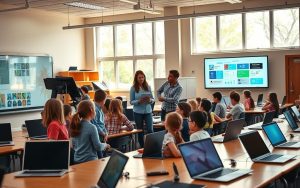
Classrooms are now more than just chalkboards and books. They use the latest tech to get students involved and learning in new ways.
Smartboards and Digital Displays
Interactive whiteboards have changed teaching. They let teachers show off dynamic content that responds to touch and stylus.
Smartboards help teachers:
Related Posts:
- How to Use Technology in an Elementary Classroom…
- How to Find the Technologies Used in a Website Tools…

- What Are the Mobile Technologies From 5G to NFC and Beyond

- What Is Moonshot Technology Ambitious and…

- What Is Semantic Technology Understanding Data…

- How to Remove Intel Rapid Storage Technology A Safe…

- Show multimedia and notes together
- Save and share lessons online
- Use the internet in class
- Get students involved with lessons
Switching from chalkboards to digital displays is a big step forward. It’s how we learn and see information in schools.
Collaborative Learning Platforms
Tools like Google Classroom and Microsoft Teams have changed group work. They make talking and working together easy.
These platforms offer:
- Editing and sharing documents live
- Virtual rooms for group talks
- Systems for handing in work and getting feedback
- Opportunities to work with others from different places
“Technology will not replace teachers, but teachers who use technology will replace those who don’t.”
Virtual and Augmented Reality Integration
VR and AR are opening up new ways to learn. They let students explore places and things they can’t see in real life.
Immersive Educational Experiences
Virtual reality takes students on digital adventures. It makes hard-to-understand ideas real and memorable.
Students can:
- Explore ancient places
- See the human body in 3D
- Watch science up close
- Visit places like space or the deep ocean
These adventures leave a mark. They help students remember what they learn and spark their curiosity.
Practical Skill Development Through Simulation
Augmented reality adds digital info to the real world. It’s great for training in safe ways, across many subjects.
| Field | AR/VR Application | Learning Benefit |
|---|---|---|
| Medical Education | Surgical procedure simulations | Risk-free practice of complex operations |
| Engineering | 3D model manipulation and testing | Visualisation of structural concepts |
| Vocational Training | Equipment operation simulations | Safe skill development before real-world use |
| Language Learning | Immersive cultural environments | Contextual vocabulary acquisition |
These tech tools give students real experience without the risks or costs of real training. VR and AR are the future of learning skills.
Artificial Intelligence and Personalised Learning
Artificial intelligence is changing how we learn by making lessons fit each student’s needs. It looks at how each person learns to give them content that’s just right for them.
Adaptive Learning Systems
Adaptive systems are a big step forward in learning tech. They use smart algorithms to change what you learn based on how well you do and how much you’re interested.
AI-Driven Curriculum Personalisation
AI looks at what you know to change your lessons for better learning. It finds out what you’re good at and what you need to work on, then makes your lessons harder or easier.
Tools like Quizzizz show how this works by giving you quizzes that are just right for you. This way, you always get lessons that match your level of understanding.

Real-time analytics give teachers quick updates on how you’re doing. They see how the whole class is doing and how each student is progressing.
This quick feedback lets teachers help you when you’re struggling. It keeps track of your progress all the time, giving a clear picture of how you’re learning.
Intelligent Tutoring Systems
Intelligent tutoring systems give you help outside of class. They use AI to act like a personal tutor, helping you learn in a way that feels like one-on-one.
24/7 Learning Support
These systems are always there for you, whenever you need help. They don’t have the same time limits as school, so you can learn whenever it’s best for you.
They answer your questions and explain tricky ideas right away. This keeps you moving forward with your learning, even when you’re not in school.
Individualised Feedback Mechanisms
AI gives you feedback that’s just for you, helping you get better. It looks at your work and tells you how to improve, focusing on what you need to work on.
This feedback is all about helping you learn, not just grading you. It shows you how to get better, not just what you got wrong.
Enhanced Accessibility and Global Learning Opportunities
Technology has changed education, making learning resources available worldwide. This change lets students from different places connect and learn together, without old limits.
Breaking Geographical Barriers
Digital platforms have removed physical barriers in education. Now, students can get top-notch teaching, no matter where they are. This makes learning without borders possible.
Massive Open Online Courses (MOOCs)
MOOCs are a big step forward in global education. Sites like Coursera and edX offer many courses from famous universities. These are often free or very cheap.
MOOCs give:
- Flexible learning for those who work
- Certificates from top schools
- Subjects from quantum physics to art history
MOOCs help learners in remote areas and poor countries a lot.
Global Classroom Collaborations
Technology lets classrooms around the world work together in real time. Students can do projects, share cultures, and do research with others everywhere.
These activities help:
- Understand and feel for other cultures
- See the world from different views
- Learn to work well with people from other places
Studies show these collaborations prepare students for the global job market.
Supporting Diverse Learning Needs
Educational technology has made big steps in meeting different learning needs. Tools can be changed to fit how each student learns best.
Assistive Technologies for Special Education
Modern assistive technology has changed learning for students with disabilities. It offers support that fits each learner’s special needs.
Key advancements include:
- Text-to-speech for the visually impaired
- Speech recognition for those with mobility issues
- Adaptive keyboards and devices
These tools make classrooms more welcoming for all students.
Multilingual Learning Platforms
Multilingual platforms help break down language barriers in education. They offer content in many languages and include translation and cultural context.
These platforms provide:
- Real-time translation during lessons
- Cultural adaptation of learning materials
- Support for both language learning and content mastery
| Technology Type | Primary Benefit | Target User Group | Example Platforms |
|---|---|---|---|
| MOOCs | Global access to quality education | Remote learners, professionals | Coursera, edX, FutureLearn |
| Assistive Technology | Personalised learning support | Students with disabilities | Kurzweil 3000, Read&Write |
| Multilingual Platforms | Language barrier removal | Non-native speakers | Duolingo, Rosetta Stone |
| Collaboration Tools | International project work | All students | Google Classroom, Microsoft Teams |
These technologies keep getting better, making learning more accessible for all. Schools around the world are using these tools to make learning fairer.
How Will Technology Impact Education: Addressing Challenges and Concerns
Technology is set to change education in big ways. But, it also brings big challenges that need careful thought. We must find ways to make sure technology helps everyone, not just some.
Digital Divide and Equity Issues
The digital divide is a big worry in education. It’s the gap between those who have digital tools and those who don’t. This gap makes learning hard for many.
Bridging the Technology Access Gap
Schools and governments are working hard to fix this problem. They give devices to students who can’t afford them. They also help with internet costs for those who can’t get online at home.
Community centres are also helping. They offer computers and internet after school. They teach people how to use technology too.

When using technology in schools, equity in education must come first. Schools are making plans to include everyone. They focus on getting devices and teaching people how to use them.
Teachers learn how to spot and fix problems with technology. They make sure everyone can do their work, even without the latest gadgets.
Data Privacy and Security Considerations
As technology collects more student data, data privacy is key. Schools must use technology wisely and protect student information.
Protecting Student Information
Schools use strong cybersecurity to keep student data safe. They use encrypted databases and teach staff about keeping data secure. They also check for security threats often.
Parents and students need to know what data is collected and how it’s used. Schools must be open about their privacy policies. They also keep their systems up to date to fight off new threats.
Ethical Use of Educational Data
Using ethical AI is important in education. Schools check algorithms to make sure they treat everyone fairly. They use data to help teaching, not replace it.
Schools have rules for how long they keep student data. They only use it for learning, not to make money. They make sure families agree to how their data is used.
| Challenge Category | Specific Concerns | Current Solutions | Implementation Status |
|---|---|---|---|
| Digital Access | Device availability, internet connectivity | 1:1 device programmes, community wifi | Ongoing rollout nationwide |
| Data Protection | Unauthorised access, data breaches | Encryption, multi-factor authentication | Varies by district resources |
| Ethical Implementation | Algorithm bias, commercial misuse | Bias audits, strict usage policies | Emerging best practices |
| Digital Literacy | Skill disparities, teacher training | Professional development, student programmes | Expanding across districts |
Fixing these problems needs teamwork from teachers, tech makers, and leaders. With careful planning and improvement, technology can make education better for everyone. It can also reduce risks.
Conclusion
Technology is changing education in big ways. It makes learning more fun, fair, and effective. This summary shows how digital tools help make learning personal, reach more people, and meet different needs.
The future classroom is becoming more dynamic. Students are set to thrive in these new environments.
But, we must tackle issues like the digital divide and keeping data safe. Success comes from working together. Teachers, admins, and tech teams must collaborate to use new tools wisely.
This way, we can make sure everyone has access and security. It’s all about using technology in a way that’s fair and safe for all.
As we move forward, staying up-to-date with new tech is key. By embracing change, we can create learning spaces that are inclusive and ready for the future. This shift opens up new chances for all students, preparing them for a world that’s more connected than ever.
FAQ
How is technology changing traditional classroom environments?
Technology is making classrooms more interactive. It uses smartboards and platforms like Zoom and Google Meet. It also uses virtual and augmented reality for immersive learning.
FAQ
How is technology changing traditional classroom environments?
Technology is making classrooms more interactive. It uses smartboards and platforms like Zoom and Google Meet. It also uses virtual and augmented reality for immersive learning.
What role does artificial intelligence play in personalised learning?
FAQ
How is technology changing traditional classroom environments?
Technology is making classrooms more interactive. It uses smartboards and platforms like Zoom and Google Meet. It also uses virtual and augmented reality for immersive learning.
FAQ
How is technology changing traditional classroom environments?
Technology is making classrooms more interactive. It uses smartboards and platforms like Zoom and Google Meet. It also uses virtual and augmented reality for immersive learning.
How does technology improve accessibility in education?
FAQ
How is technology changing traditional classroom environments?
Technology is making classrooms more interactive. It uses smartboards and platforms like Zoom and Google Meet. It also uses virtual and augmented reality for immersive learning.
FAQ
How is technology changing traditional classroom environments?
Technology is making classrooms more interactive. It uses smartboards and platforms like Zoom and Google Meet. It also uses virtual and augmented reality for immersive learning.
What are the main challenges associated with educational technology?
FAQ
How is technology changing traditional classroom environments?
Technology is making classrooms more interactive. It uses smartboards and platforms like Zoom and Google Meet. It also uses virtual and augmented reality for immersive learning.
FAQ
How is technology changing traditional classroom environments?
Technology is making classrooms more interactive. It uses smartboards and platforms like Zoom and Google Meet. It also uses virtual and augmented reality for immersive learning.
Can technology help students with special educational needs?
FAQ
How is technology changing traditional classroom environments?
Technology is making classrooms more interactive. It uses smartboards and platforms like Zoom and Google Meet. It also uses virtual and augmented reality for immersive learning.
FAQ
How is technology changing traditional classroom environments?
Technology is making classrooms more interactive. It uses smartboards and platforms like Zoom and Google Meet. It also uses virtual and augmented reality for immersive learning.
How did technology support education during the COVID-19 pandemic?
FAQ
How is technology changing traditional classroom environments?
Technology is making classrooms more interactive. It uses smartboards and platforms like Zoom and Google Meet. It also uses virtual and augmented reality for immersive learning.
What measures are being taken to address the digital divide in education?
FAQ
How is technology changing traditional classroom environments?
Technology is making classrooms more interactive. It uses smartboards and platforms like Zoom and Google Meet. It also uses virtual and augmented reality for immersive learning.
FAQ
How is technology changing traditional classroom environments?
Technology is making classrooms more interactive. It uses smartboards and platforms like Zoom and Google Meet. It also uses virtual and augmented reality for immersive learning.
How do virtual and augmented reality benefit practical skill development?
FAQ
How is technology changing traditional classroom environments?
Technology is making classrooms more interactive. It uses smartboards and platforms like Zoom and Google Meet. It also uses virtual and augmented reality for immersive learning.
FAQ
How is technology changing traditional classroom environments?
Technology is making classrooms more interactive. It uses smartboards and platforms like Zoom and Google Meet. It also uses virtual and augmented reality for immersive learning.